A resilient cutting surface
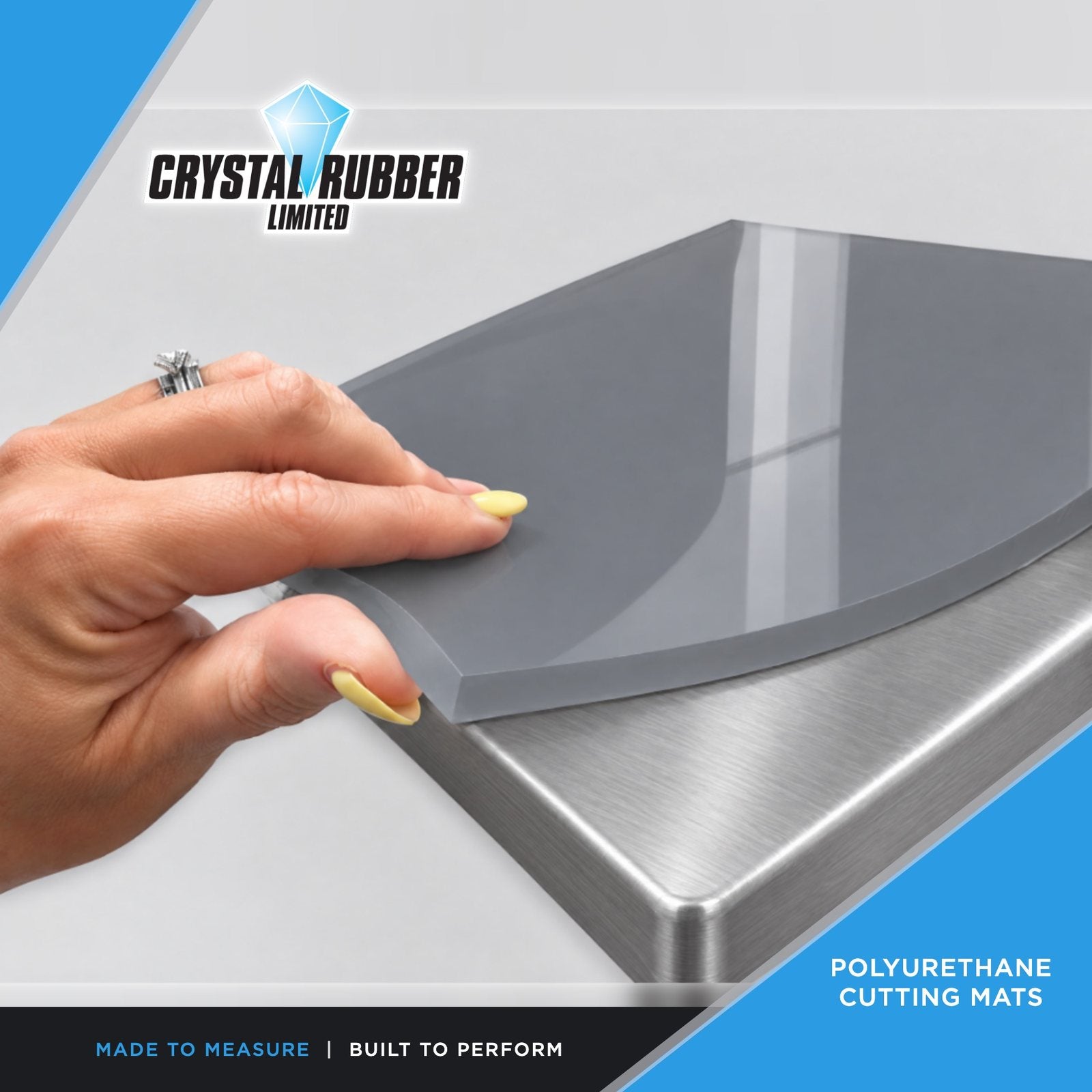
Polyurethane combines firmness with elastic recovery. At 70 Shore hardness the mat supports the work while giving a sharp blade enough give to cut cleanly, without striking the bench beneath.

Polyurethane cutting mat
Silicone-free, self-healing polyurethane bench mats made for repetitive industrial cutting. Six colours, 5 mm standard thickness, custom sheets up to 3680 × 1660 mm.
Protect cutting tables and workbenches with a resilient 70 Shore polyurethane surface that closes around clean, shallow blade cuts and reduces permanent tracking. Tell us your size and colour and our experts will send a made-to-size quotation.
Need help specifying a mat? Call 01925 825552 (Monday to Friday, 8.30am to 5pm)
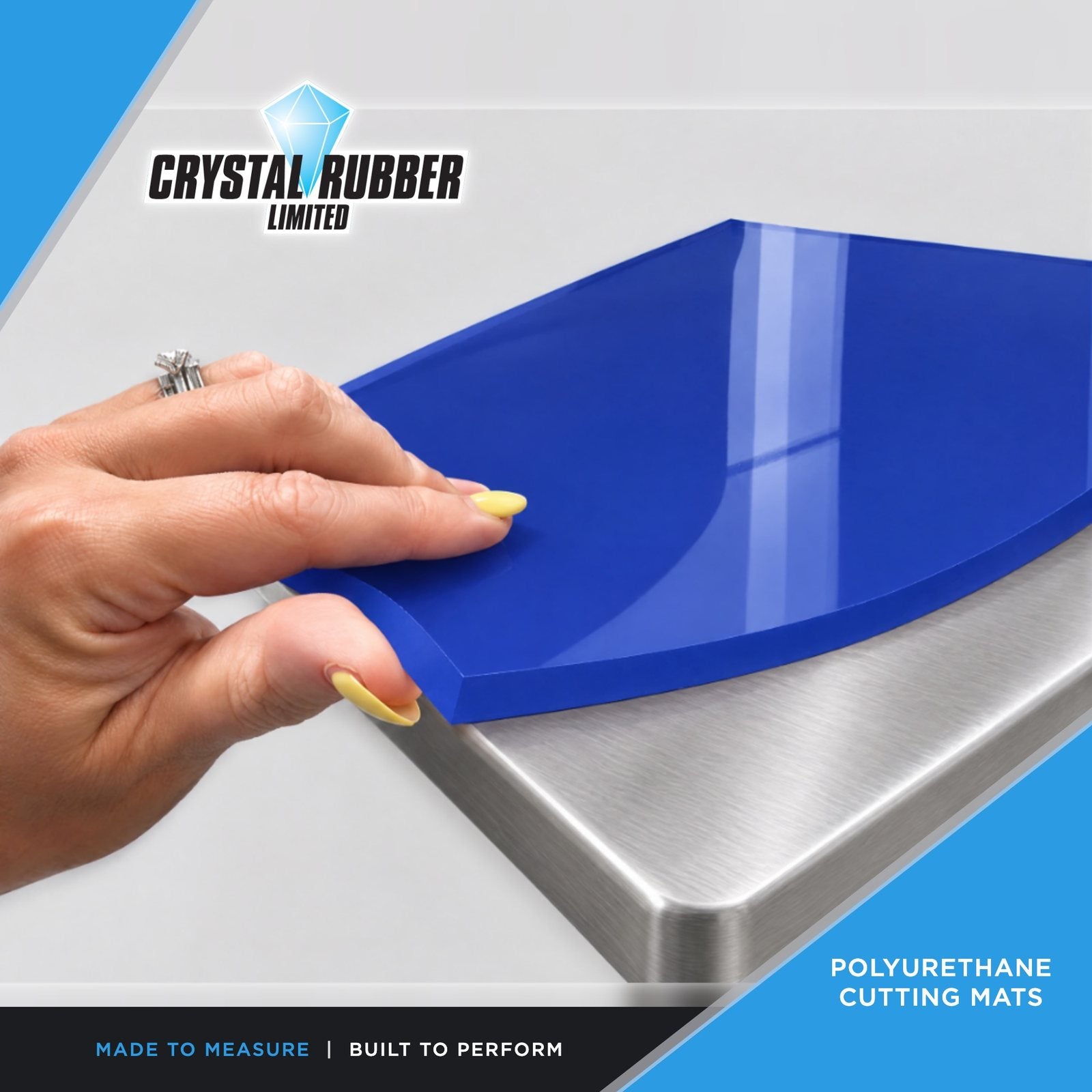
Shown in Blue. Six colours available.
Made-to-size quotation
Three quick steps: choose your mat, add your details, then your delivery address for an accurate carriage quote. An expert checks every request and replies within 3 hours during opening hours.
The product
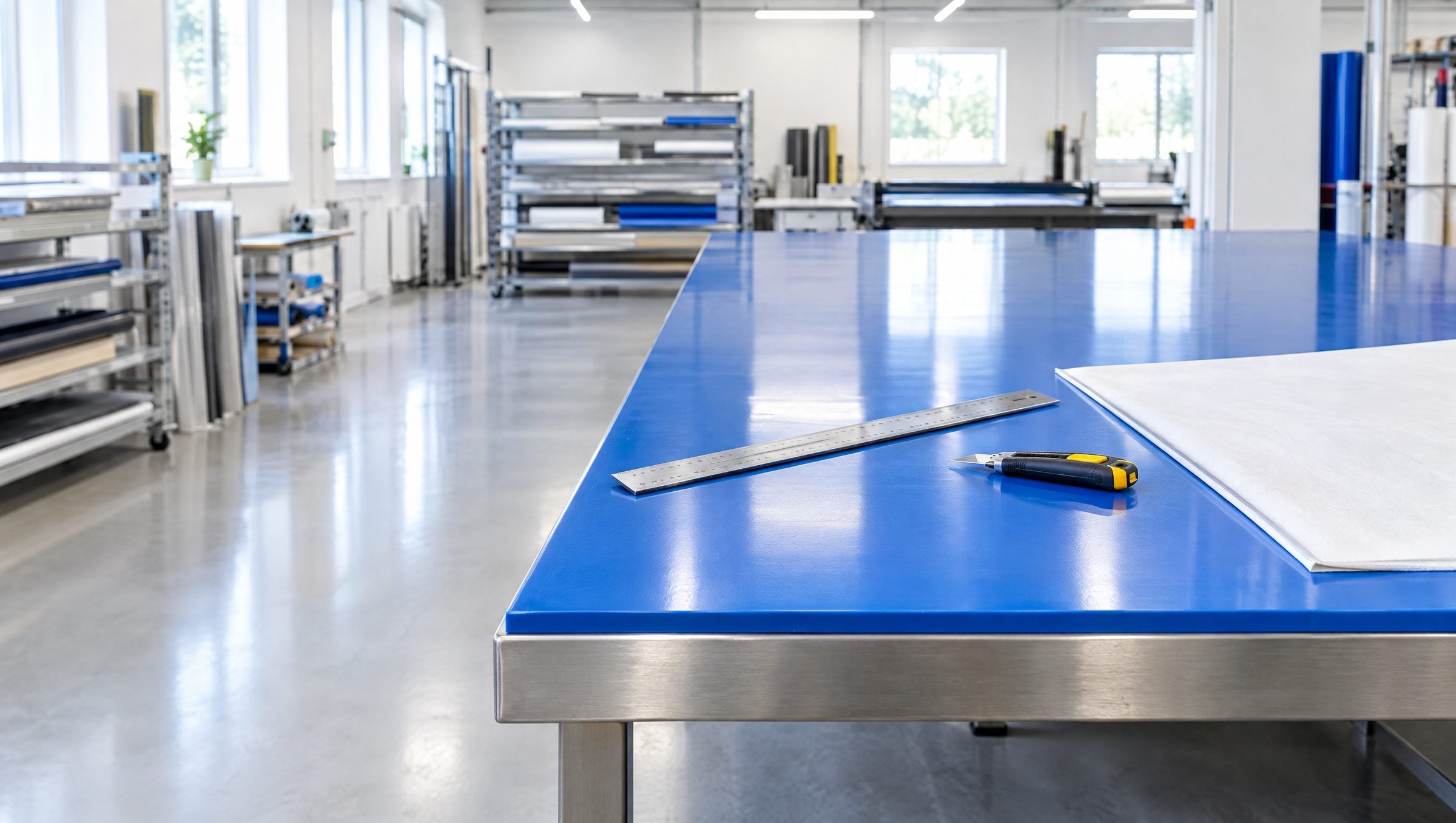
A polyurethane cutting mat is a resilient protective sheet placed over a workbench or cutting table. It supports controlled blade cutting, protects the bench beneath and reduces the hard grooves that can deflect a blade on later cuts.
This mat uses a silicone-free polyurethane formulation with self-healing behaviour. After a sharp blade makes a clean, shallow cut, the flexible material closes around the blade path, leaving a smoother surface than a rigid board. Self-healing does not mean indestructible: deep cuts, punctures and repeated cutting in one track can leave permanent marks.
Why choose this mat
Polyurethane combines firmness with elastic recovery. At 70 Shore hardness the mat supports the work while giving a sharp blade enough give to cut cleanly, without striking the bench beneath.
The self-healing surface closes around ordinary shallow blade paths, so pronounced grooves are slower to build up and your blade is less likely to follow an old track.
A replaceable polyurethane layer between blade and worktop. One made-to-size sheet can cover a full production table instead of several small hobby mats.
Specified silicone-free, so it removes one potential contamination source where cut parts go on to bonding, coating, painting or composite lay-up.
Choose your width and length up to 3680 × 1660 mm and one of six colours for the best contrast with the material you cut.
Our specialists check every size, thickness and application before quoting, and reply within 3 hours during opening hours.
Ready to protect your benches?
Tell us the size and colour. An expert replies within 3 hours.
Self-healing, honestly explained
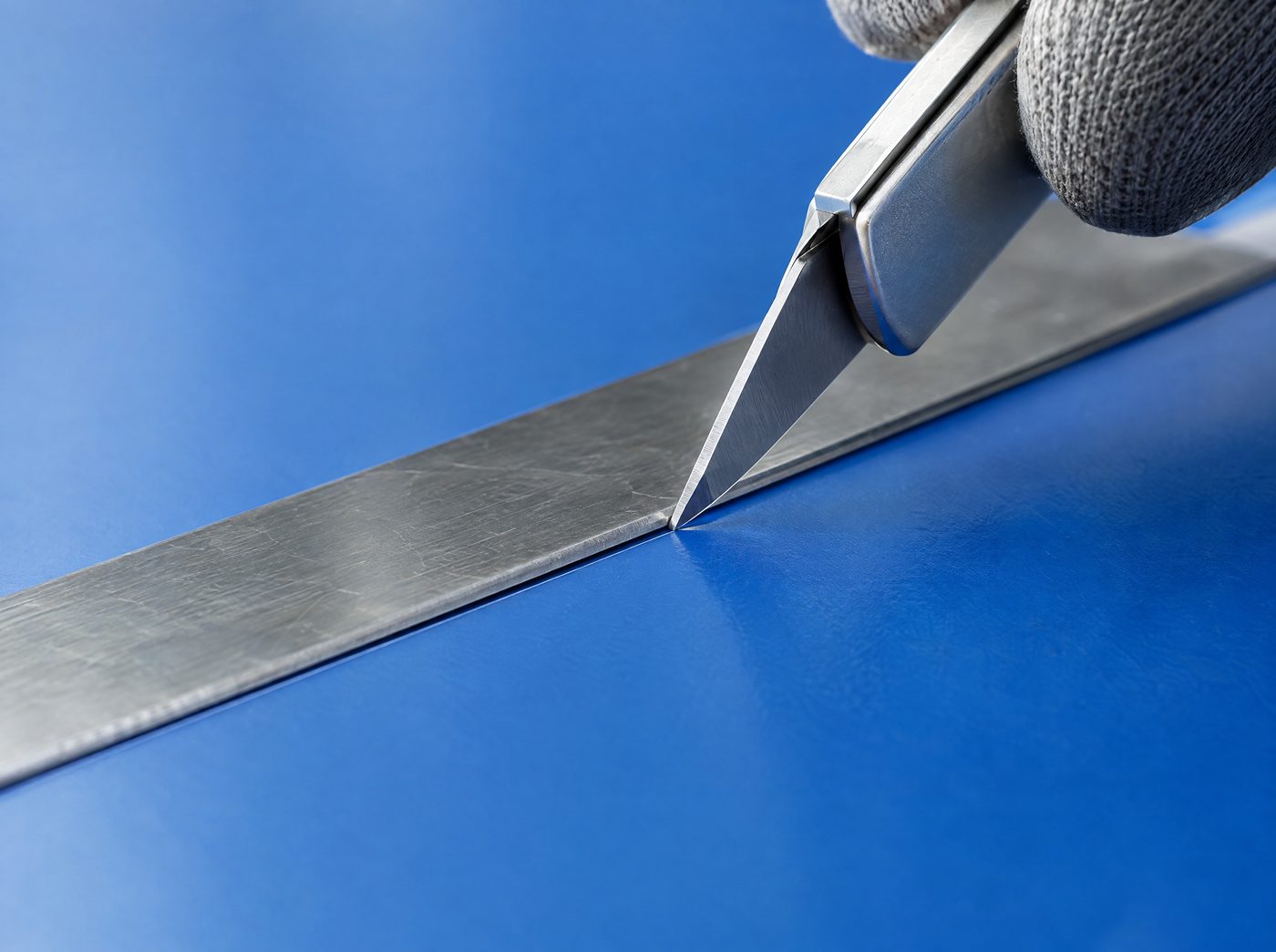
A well-formulated resilient surface closes around a clean, shallow blade path after the blade is withdrawn, reducing the groove and keeping the working area smoother. It does not rebuild removed material, so deep gouges and repeated cuts on the same line can remain.
1. Blade enters
A sharp blade parts the resilient surface without removing material.
2. Blade passes
The polyurethane flexes around the edge as the cut is made.
3. Surface closes
The material recovers and closes around the shallow blade path.
Heals best with
Can leave permanent marks
Technical specification
| Product type | Industrial polyurethane bench cutting mat |
|---|---|
| Material | Polyurethane |
| Surface behaviour | Self-healing for clean, shallow cuts |
| Silicone content | Silicone-free |
| Hardness | 70 Shore |
| Standard thickness | 5 mm |
| Other thicknesses | 6, 7, 8, 9 and 10 mm on request |
| Colours | Red, green, blue, black, yellow and grey |
| Maximum sheet size | 3680 × 1660 mm |
| Sizing | Cut to your dimensions, within the maximum sheet size |
| Intended use | Flat on a workbench or cutting table |
| How to buy | Made-to-size quotation based on size, thickness, colour, quantity and application |
Performance depends on the exact formulation and operating conditions. Ask us to confirm suitability for high temperatures, aggressive chemicals, food contact, electrostatic control or regulated cleanroom processes.
Maximum sheet size
One sheet can cover a full production cutting table. Most sizes up to the maximum can be cut; enter yours in the quote form and the drawing updates.
Solid: self-healing, silicone-free grade. Dashed: our normal polyurethane grade, discussed separately.
Thickness
Choose the thinnest mat that gives adequate protection for your real cutting process, allowing for wear and workstation height. Our 5 mm standard suits most controlled bench cutting; thicker sheets are available on request.
| Thickness | Buying position | Questions to consider |
|---|---|---|
| 5 mm Standard | Lowest profile, for controlled cutting and tables where edge height matters. Our standard thickness. | Is cutting shallow and controlled, on a flat, well-supported bench? |
| 6–7 mm On request | General-purpose range for routine workshop and production cutting. | Is the mat used daily with rotary cutters, safety knives or craft knives? |
| 8–9 mm On request | A heavier protective layer for frequent cutting or more cushioning from the bench. | Is cutting pressure higher, or is extra bench protection preferred? |
| 10 mm On request | The thickest self-healing option, for demanding bench protection. | Will the extra edge height affect handling, jigs or ergonomics? |
A buying guide, not engineering limits. No polymer cutting mat is cut-proof. Not sure? Ask for advice before ordering a large sheet.
Six colours
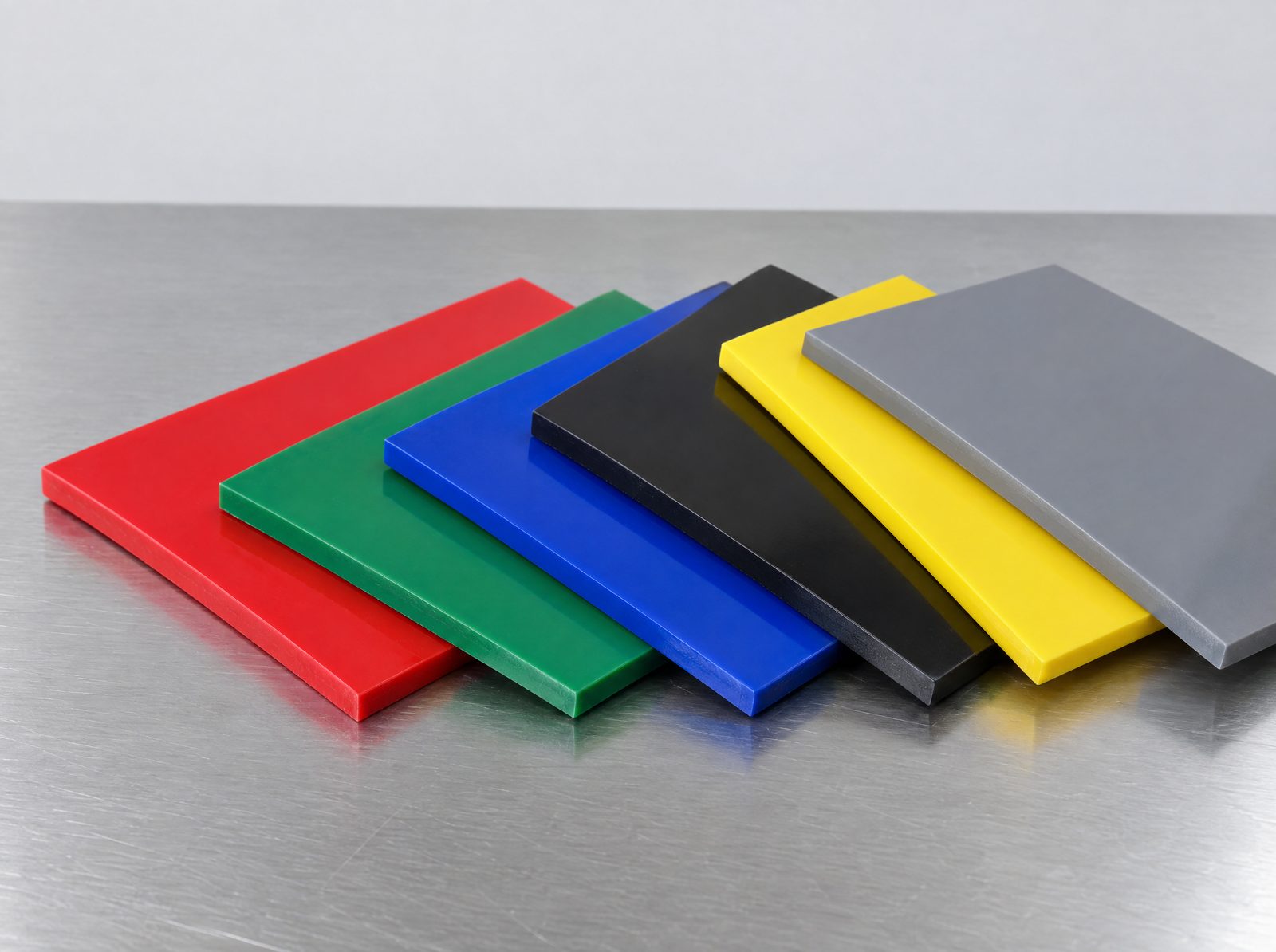
Pick a colour that contrasts with the materials you cut, or colour-code benches by department or process.
Blue
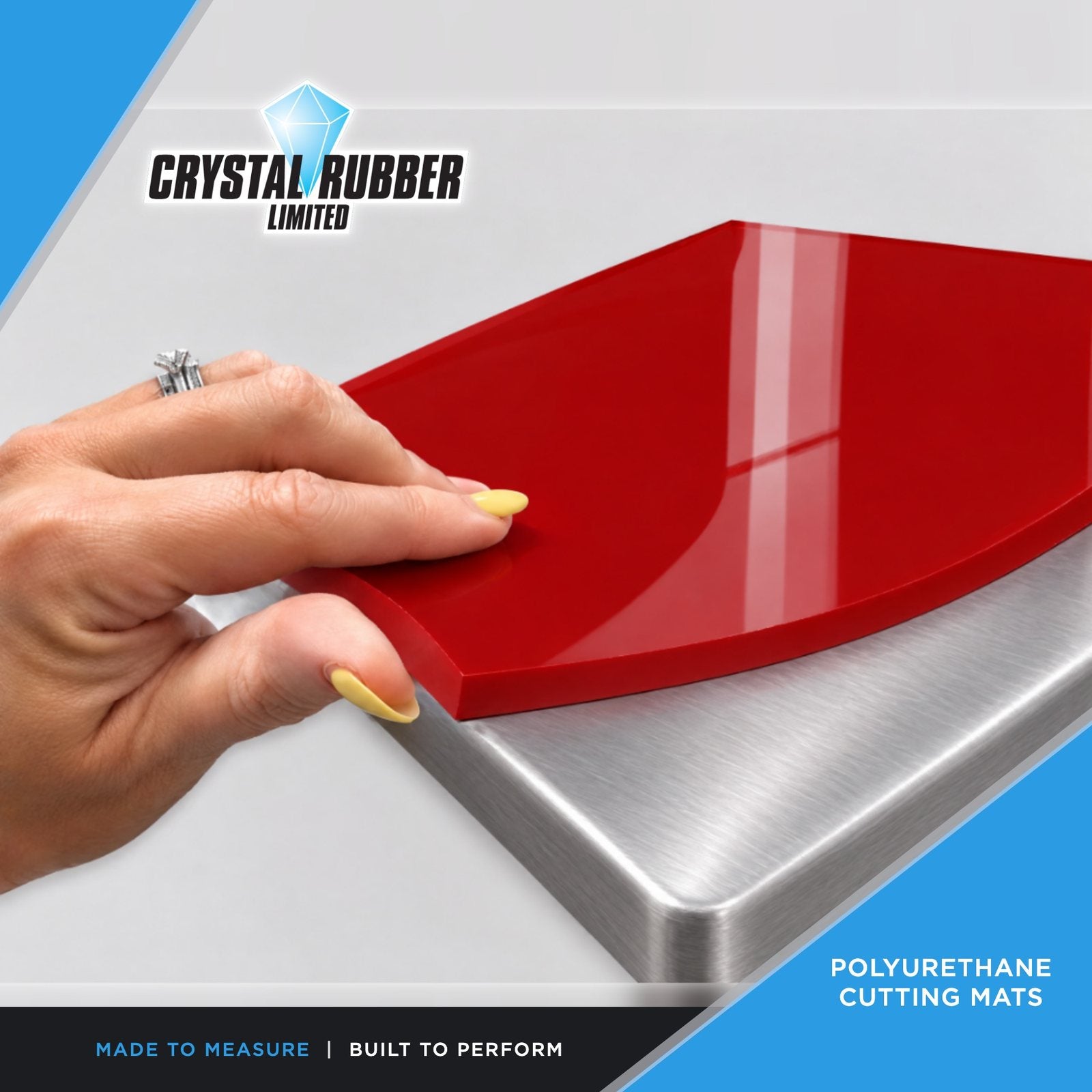
Red
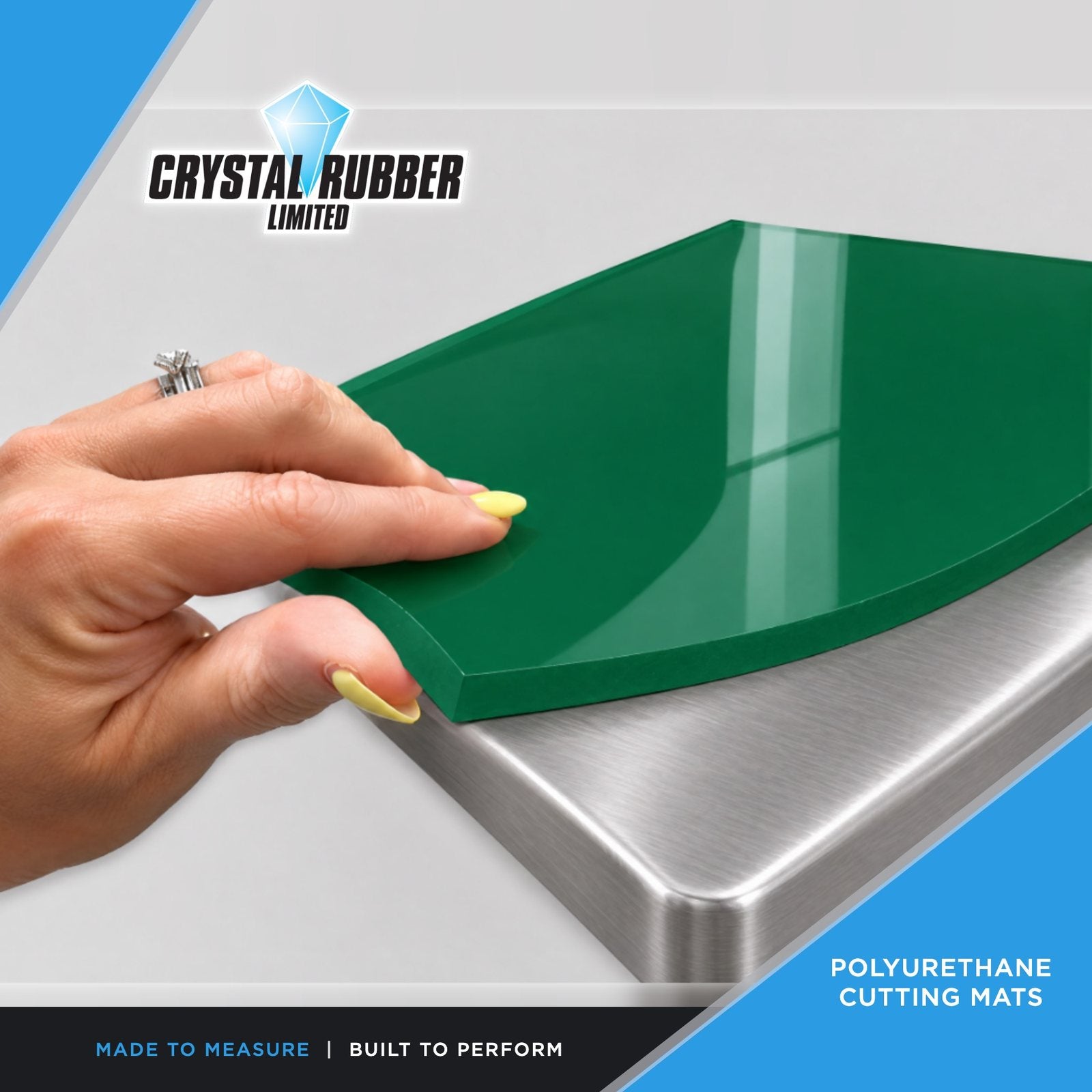
Green
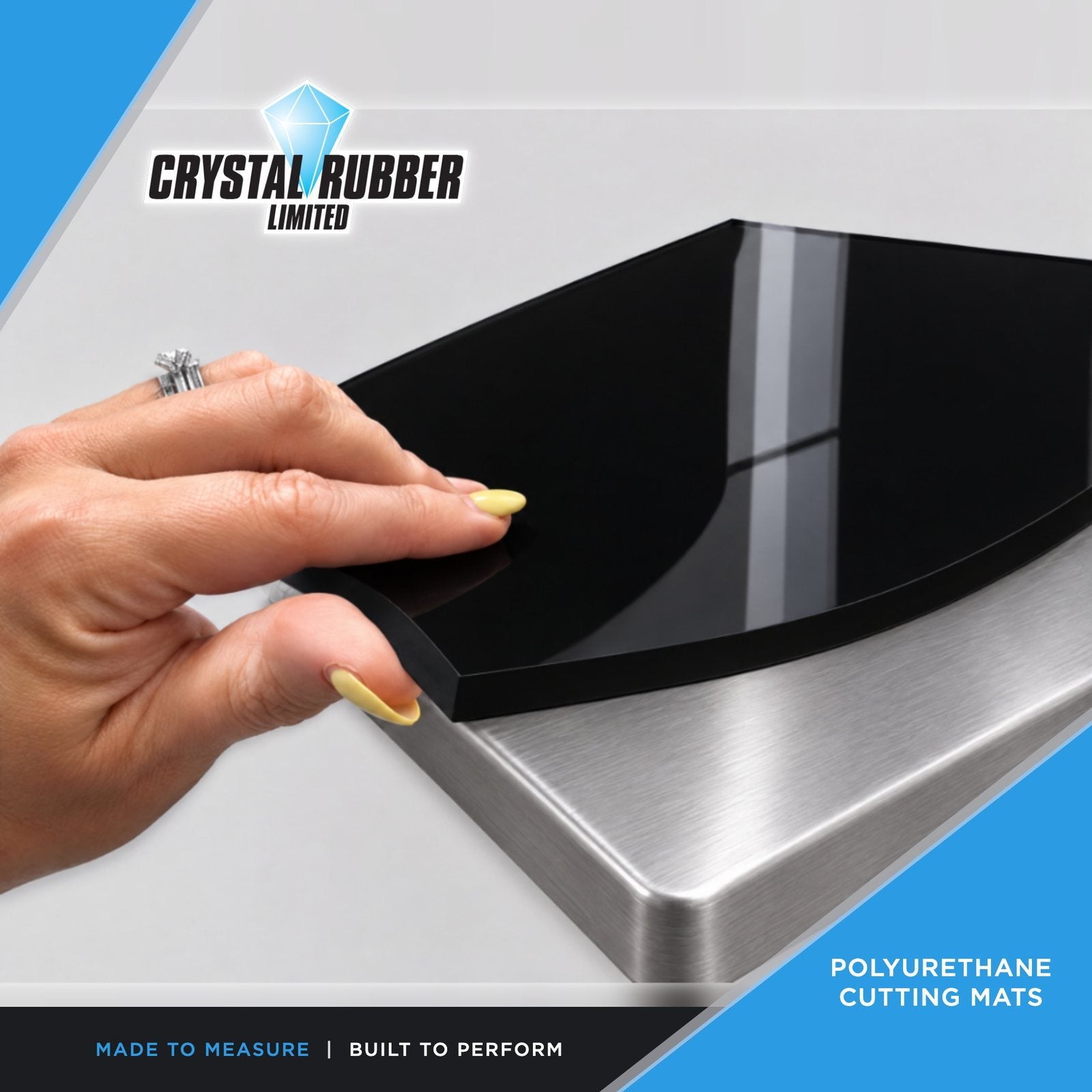
Black
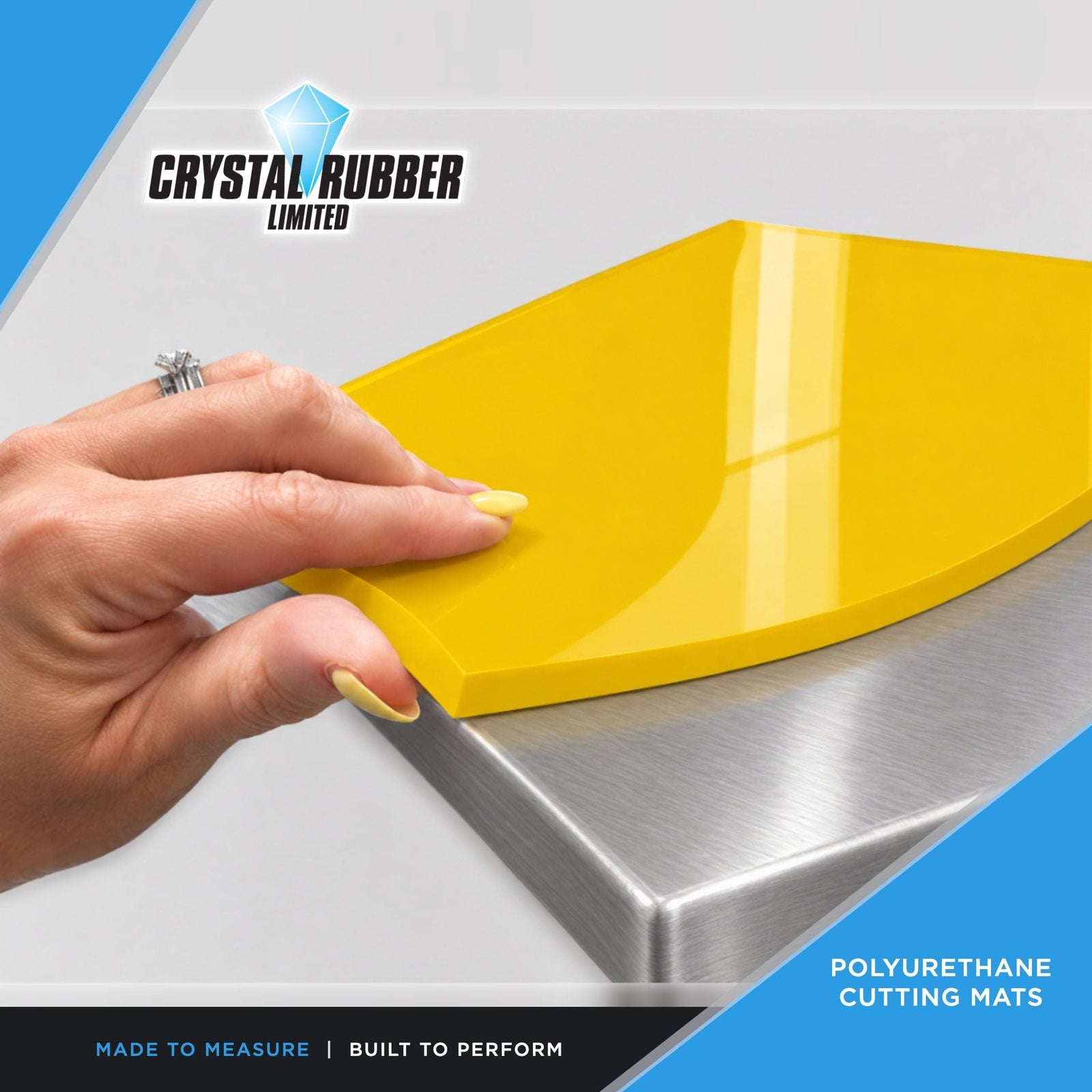
Yellow
Grey
Polyurethane vs PVC
Both polyurethane and PVC can be made into self-healing cutting mats. The better choice depends on duty level, size, contamination controls, construction and budget, not simply the polymer name.
| Buying factor | Polyurethane cutting mat (this product) | PVC self-healing cutting mat |
|---|---|---|
| Typical positioning | Industrial benches, large cutting tables and repetitive production work | Craft, sewing, graphics and general bench cutting |
| Self-healing | Available when formulated for it; this grade is specified as self-healing | Available in quality layered PVC mats; not all PVC mats heal equally |
| Wear profile | Polyurethane is widely valued for abrasion resistance, tear resistance and resilience | Varies with the PVC formulation, plasticiser system and layer construction |
| Flexibility | Naturally elastomeric: give with recovery | Flexible PVC generally relies on plasticisers for softness |
| Silicone status | This grade is specified silicone-free | Must be checked product by product |
| Maximum size | Cut to size up to 3680 × 1660 mm | Varies; many retail mats are fixed standard sizes |
| Thickness | 5 mm standard, 6–10 mm on request | Varies; many craft mats are thinner |
| Printed grid | Plain industrial surface | Often available on craft-oriented mats |
| Colour choice | Red, green, blue, black, yellow and grey | Often green, blue, clear or maker-specific colours |
| Price | Quoted to size and specification | Standard sizes are often the lower-cost entry point |
| Best reason to choose | A large custom surface, industrial wear characteristics and silicone-free composition | Standard sizes, measuring grids and lower initial cost where suitable |
| Get a free quote | View our PVC cutting mats |
For a large industrial cutting table, polyurethane is often the stronger specification when abrasion resistance, resilience, custom size and silicone-free composition matter. PVC may suit lighter work, printed grids or a lower-cost standard mat.
Some PVC mats do: professional layered PVC mats are sold as self-healing. Compare how well each surface resists permanent tracks under your blade, pressure and cutting frequency.
There is no honest universal figure. Life depends on thickness, formulation, blade sharpness, pressure, repeated tracks, cleaning and hours of use. Ask us for an application review when life is critical.
Polyurethane sounds right for your benches?
Get a made-to-size quote in six colours, with an expert reply within 3 hours.
Applications
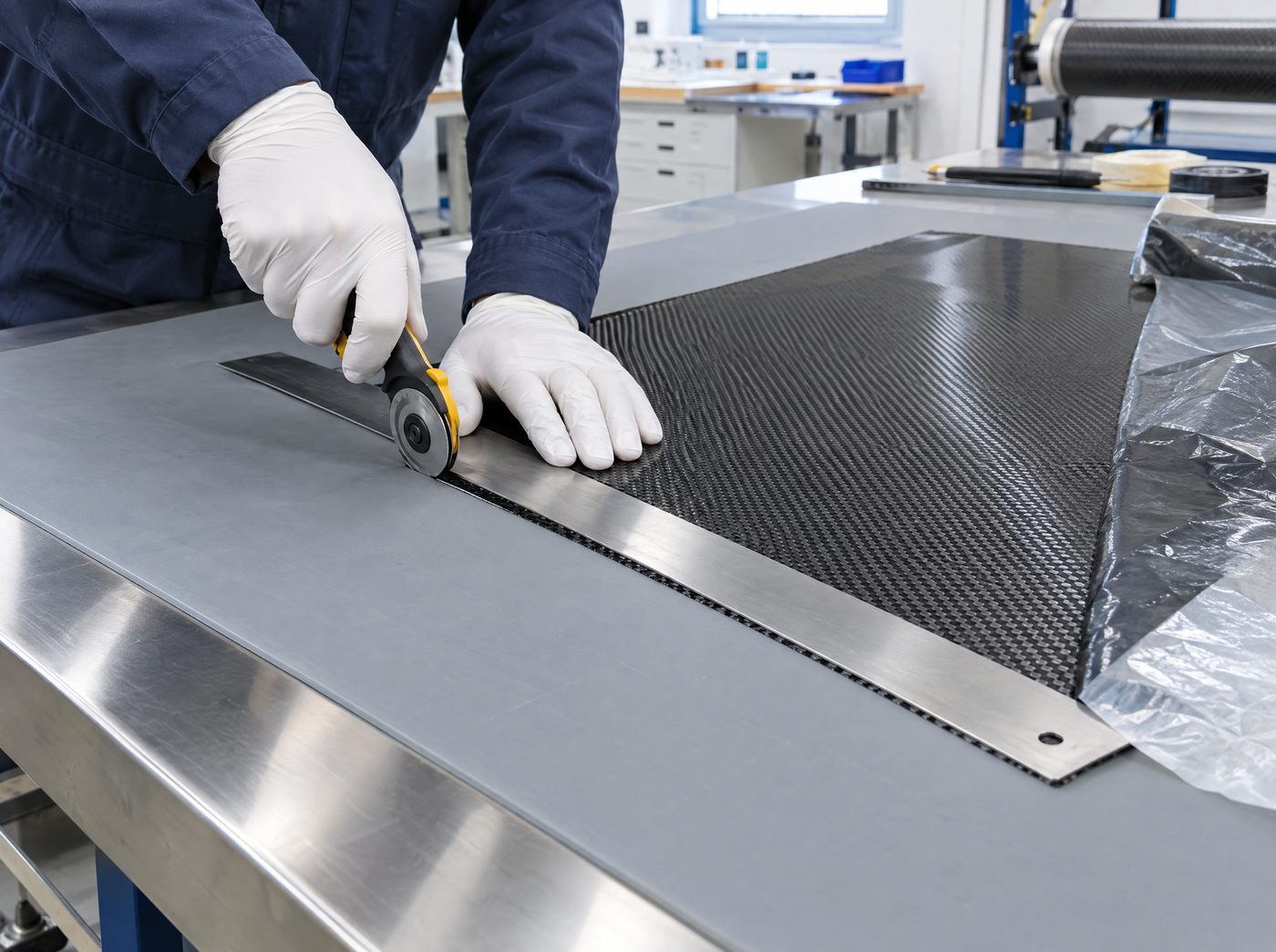
A silicone-free cutting surface for preparing reinforcements and pre-preg before lay-up. Tell us the resin system, cutting tool and contamination controls when you ask for a quote.
Quote for this application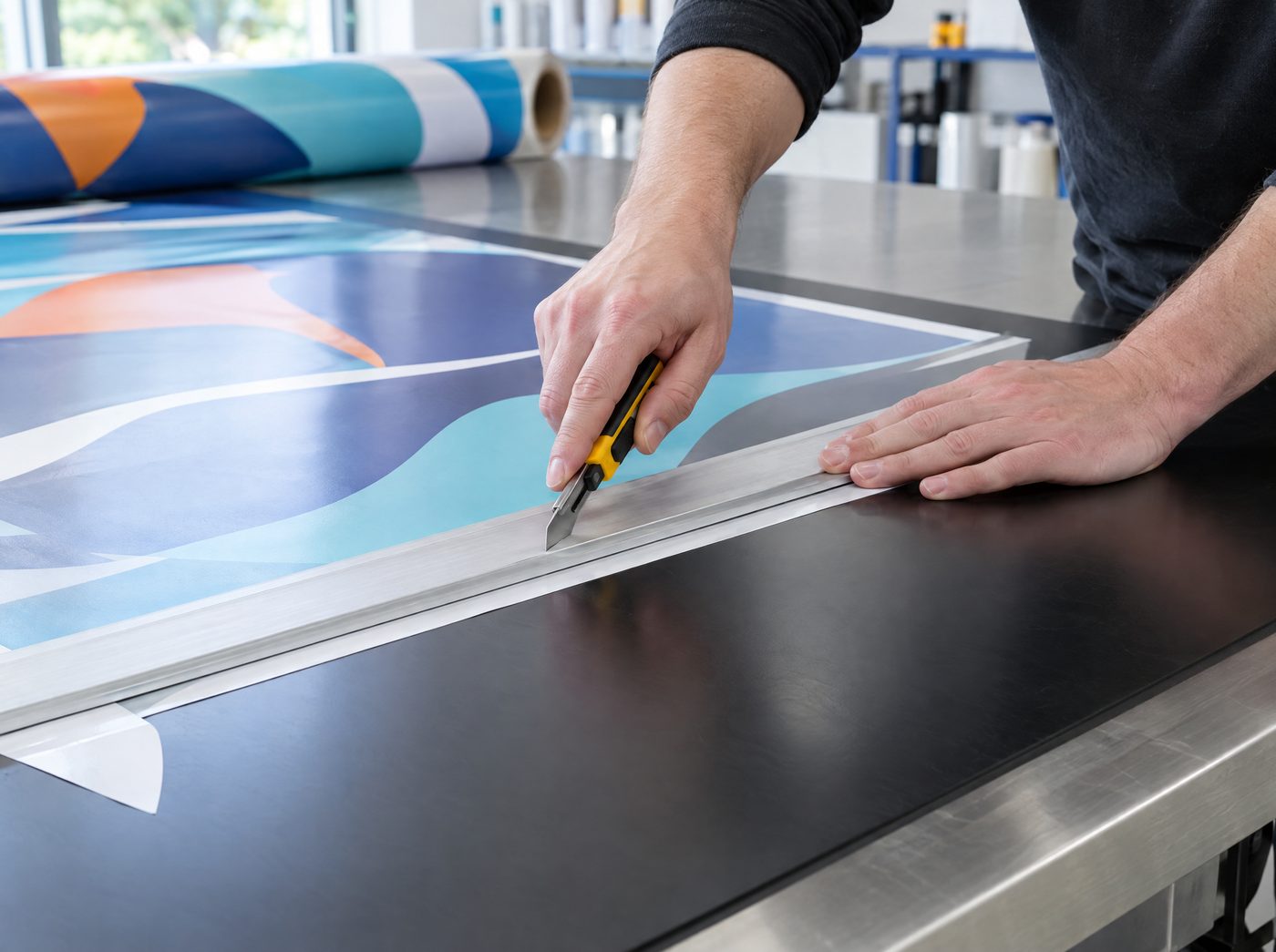
Trim vinyl, film, banner media and board on one large sheet, with no joins between small mats and a consistent working area.
Quote for this application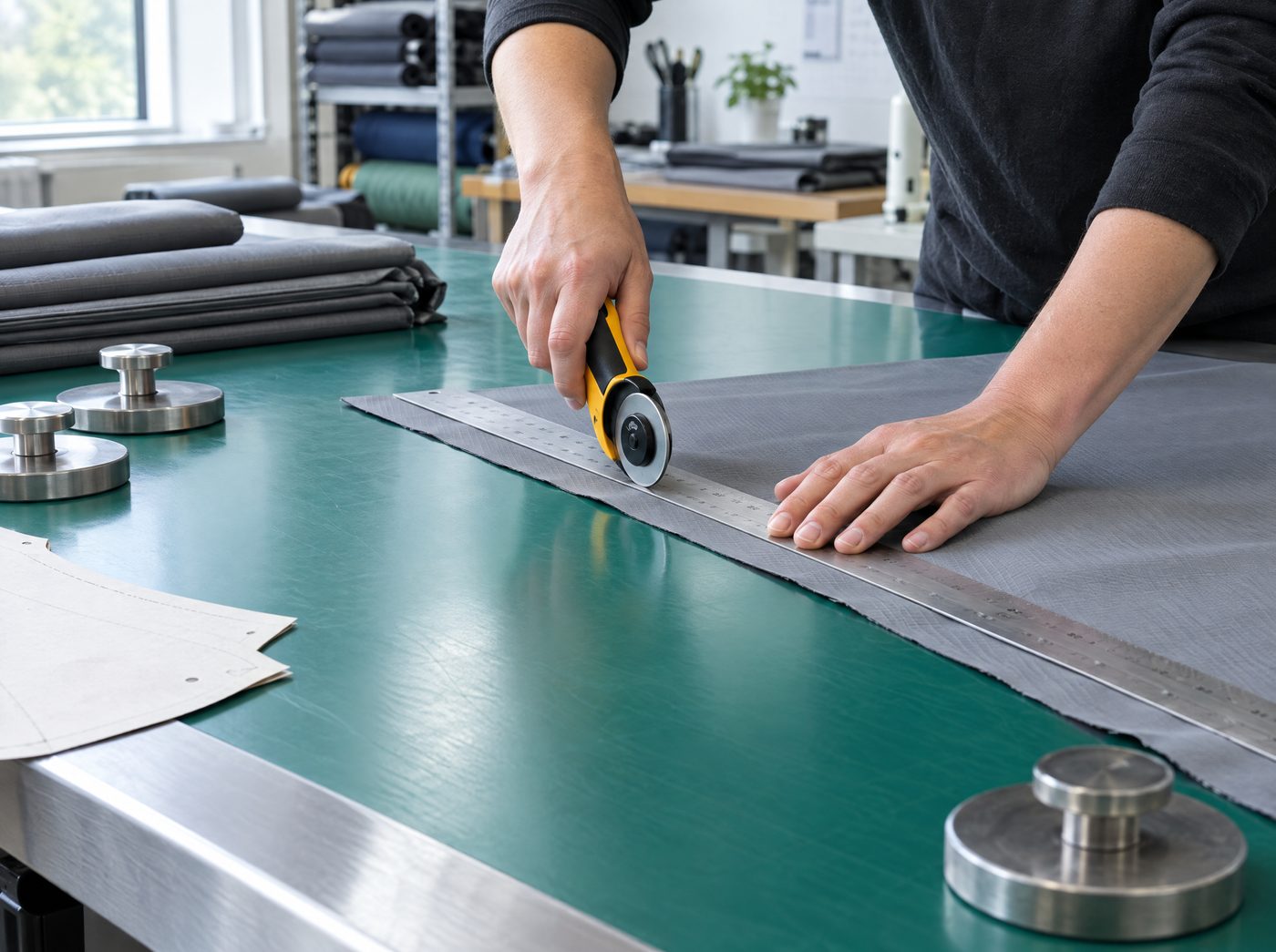
A resilient base for rotary or straight-blade cutting of fabric and technical textiles. Test delicate or coated materials to confirm friction and marking.
Quote for this application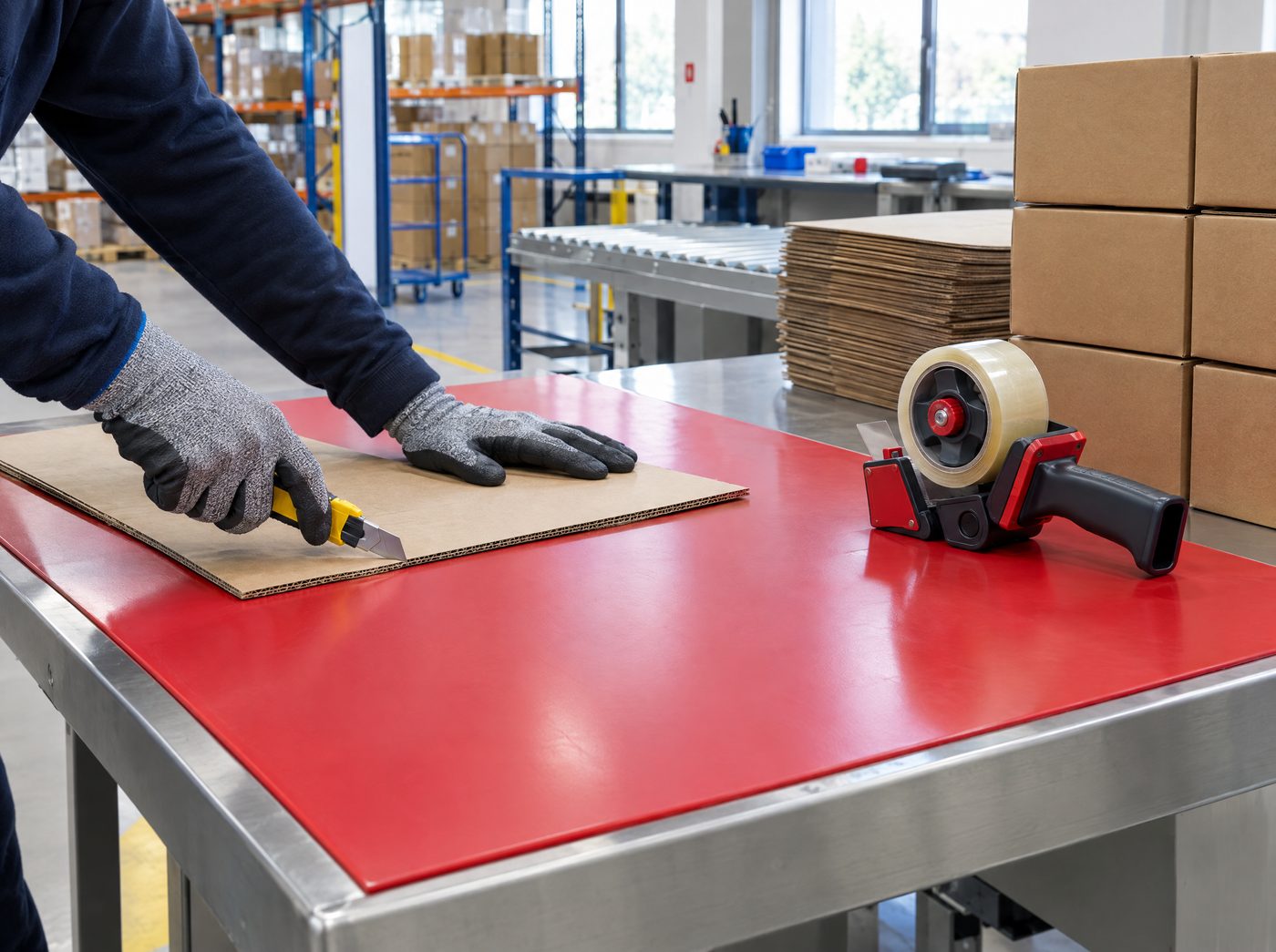
A replaceable surface for routine trimming and opening tasks. Use safety knives and avoid cutting repeatedly along the same line.
Quote for this applicationProtects the bench during pattern and component cutting. Tell us the leather thickness and blade style.
Covers assembly benches where occasional hand cutting would score the worktop. Not a hot-work surface.
Silicone-free
Silicone can transfer in very small quantities and interfere with some adhesive, paint, coating and surface-treatment processes. A silicone-free cutting mat removes one potential contamination source from the bench, which matters when cut components go on to bonding, laminating, painting or composite lay-up.
Silicone-free does not automatically mean:
If any of these matter, ask us for the relevant declaration or data before ordering.
How ordering works
Usable width and length in millimetres, checking for posts, outlets and raised edges.
Pick one of six colours. 5 mm is standard; ask us for 6–10 mm.
Send the form below. An expert replies within 3 hours during opening hours.
Approve the quote and we cut your mat to size and arrange delivery.
For shapes other than a rectangle, send a dimensioned drawing and ask us about cut-outs and corners.
Getting the most from your mat
For controlled hand cutting with sharp rotary cutters, safety knives, utility knives and craft knives.
Correct care keeps the mat flat and stops debris building up in blade tracks.
A hairline after cutting is not a failure. Replace the mat when:
Need a different polyurethane grade?
We can also supply normal polyurethane in hardnesses from 40 to 90 Shore, in red, green, blue, black, yellow or grey, with sheets up to 4000 × 1700 mm. It is a separate material: self-healing and silicone-free performance are not stated for this range, so ask us for written confirmation if either matters.
What our customers say
“Just wanted to say thanks for the excellent service you and your team have provided with this order, it is very much appreciated. Please thank all who made it possible and I look forward to giving you future orders and of course recommending your company to others. Thanks again.”

Catercool NW Ltd
Verified customer
Ask a cutting-mat specialist
Thickness, colour, chemicals, shapes or a larger sheet: send us your question and a specialist will reply within 3 hours during opening hours.
Questions
A resilient polyurethane sheet used as a protective cutting surface on a workbench or cutting table. It gives the blade a controlled surface to enter while protecting the bench beneath.
Yes. This grade is specified as self-healing: the flexible surface closes around clean, shallow blade paths after cutting. Deep gouges, punctures and repeated cuts on one line may remain visible or permanent.
No. Self-healing reduces surface scarring; it does not rebuild removed material. Use sharp blades and spread cutting across the working area for the best result.
Polyurethane is often preferred for large industrial surfaces because of its resilience, abrasion and tear performance, and the availability of silicone-free custom sheets. PVC can suit lighter work, standard sizes, measuring grids and a lower initial cost. Compare the exact products and intended duty.
Yes, some can. Several professional mats use layered PVC construction and are sold as self-healing. The polymer name alone does not tell you how well a mat heals or how long it lasts.
The silicone-free self-healing grade is available up to 3680 × 1660 mm. Our normal polyurethane can be discussed up to 4000 × 1700 mm, but its self-healing and silicone-free status must be checked separately.
5 mm is our standard thickness. 6, 7, 8, 9 and 10 mm are available on request: choose "Other thickness" in the quote form or contact us.
Choose by cutting force, frequency, tool, material and the bench protection you want. 5 mm is the lowest-profile option; 6–7 mm suits many routine uses; 8–10 mm gives a thicker working layer for more demanding work. Ask us for advice.
Red, green, blue, black, yellow and grey. Pick a colour that contrasts well with the material you cut.
Shore hardness measures resistance to indentation, not thickness or density. A higher number on the same scale means a harder material. 70 Shore gives a supportive surface that still has give under a blade.
Yes, the self-healing 70 Shore grade is specified as silicone-free. If silicone control is part of a formal quality process, ask us for a current supplier declaration with your order.
Silicone contamination can interfere with some bonding, coating and painting systems. A silicone-free cutting surface removes one potential source where cut parts go on to an adhesion-sensitive process.
No. Silicone-free describes the material formulation. Cleanroom suitability also depends on particle shedding, cleaning and outgassing, so check it separately against your process.
These have not been established for this grade. Do not use it as an ESD surface, for direct food contact, or for hot work, irons or soldering unless we confirm otherwise in writing.
Polyurethane as a material family resists many oils and greases, but compatibility depends on the chemical, concentration, temperature and exposure time. Tell us the substance and we will check.
Sharp rotary cutters, safety knives, utility knives and craft knives are typical for controlled hand cutting. Test your real combination of blade, material and pressure before committing to a large sheet.
Yes. The mat is cut to size on a quotation basis within the maximum 3680 × 1660 mm sheet. Ask us about special shapes, holes, notches or radiused corners before ordering.
No. It is a plain industrial cutting surface.
Use a soft cloth, mild detergent and room-temperature water, then dry it flat. Avoid abrasives and aggressive solvents unless we have confirmed compatibility.
There is no single honest figure: life depends on blade sharpness, pressure, repeated tracks, thickness, maintenance and the material being cut. Replace it when grooves catch the blade or the surface no longer lies flat.
We quote on your dimensions, thickness, colour, quantity, any special cutting and the delivery location.
Your colour, width, length, thickness and quantity, your contact details and the delivery address. Add anything special, such as shapes, cut-outs or chemical exposure, in the project notes. The quote form takes you through it in three short steps.
Talk to our experts
Tell us the size and colour. A specialist checks every detail and replies within 3 hours during opening hours.
Monday to Friday, 8.30am to 5pm · info@crystalrubber.co.uk
Related products